
10 Reasons to Invest in the Arts in Santa Clara County
The arts are fundamental to our humanity. They ennoble and inspire us-fostering creativity, empathy, and beauty. The arts also strengthen our communities socially, educationally, and economically-benefits that persist even during a pandemic that has been devastating to the arts. The following 10 reasons show why an investment in artists, creative workers, and arts organizations is vital to the nation's post-pandemic healing and recovery.
The arts are fundamental to our humanity. They ennoble and inspire us-fostering creativity, empathy, and beauty. The arts also strengthen our communities socially, educationally, and economically-benefits that persist even during a pandemic that has been devastating to the arts. The following 10 reasons show why an investment in artists, creative workers, and arts organizations is vital to the nation's post-pandemic healing and recovery.
1. Arts unify communities
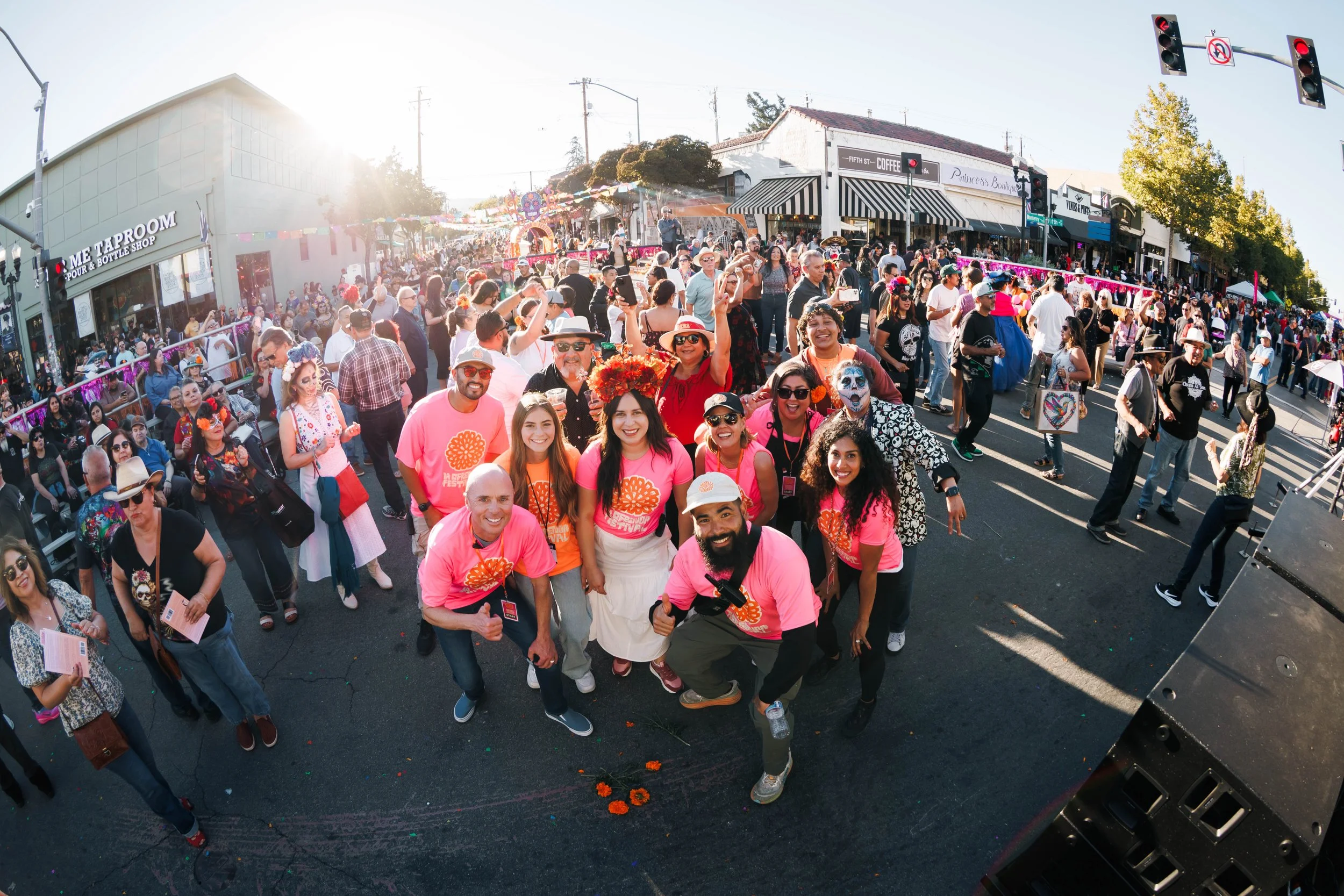
72% of Americans believe "the arts unify our communities regardless of age, race, and ethnicity" and 73% agree that the arts "helps me understand other cultures better" —a perspective observed across all demographic and economic categories.
2. Arts improve individual well-being
81% of the population says the arts are a "positive experience in a troubled world," 69% of the population believe the arts "lift me up beyond everyday experiences," and 73% feel the arts give them "pure pleasure to experience and participate in."
3. Arts strengthen the economy.
The nation's arts and culture sector—nonprofit, commercial, education —is a $1.02 trillion industry that supports 4.9 million jobs (2021). That is 4.4% of the nation's economy—a larger share of GDP than powerhouse sectors such as transportation, construction, and agriculture. In California, arts and culture is a $261.1 billion industry—7.7% of the state economy—and supports 742,432 jobs (bigger than transportation, construction, and agriculture).
The arts accelerate economic recovery: a growth in arts employment has a positive and causal effect on overall employment. (U.S. Bureau of Economic Analysis). Santa Clara County's nonprofit arts industry alone generates $384.5 million in economic activity annually— spending by organizations and their audiences-which supports 5,916 jobs and generates $66.3 million in local, state, and federal government revenue. (2022)
4. Arts drive tourism and revenue to local businesses.
Attendees at Santa Clara County's nonprofit arts and culture events spend an average of $39.56 per person, per event, beyond the cost of admission on items such as meals, parking, and lodging—vital income for local businesses. 26% of attendees live outside of Santa Clara County; they average $59.29 in event-related spending. Arts travelers are ideal tourists, staying longer and spending more to seek out authentic cultural experiences.
5. Arts improve academic performance.
Students engaged in arts learning have higher GPAs, standardized test scores, and college-going rates as well as lower drop-out rates. These academic benefits are reaped by students across all socio-economic strata. Yet the Department of Education reports that access to arts education for students of color is significantly lower than for their white peers. 91% of Americans believe that arts are part of a well-rounded K-12 education.
6. Arts spark creativity and innovation
Creativity is among the top five applied skills sought by business leaders-per the Conference Board's Ready to Innovate report —with 72% saying creativity is of "high importance" when hiring. Research on creativity shows that Nobel laureates in the sciences are 17 times more likely to be actively engaged as an arts maker than other scientists.
7. Arts have a social impact.
University of Pennsylvania researchers have demonstrated that a high concentration of the arts in a city leads to higher civic engagement, more social cohesion, higher child welfare, and lower poverty rates.
8. Arts improve healthcare.
Nearly one-half of the nation's healthcare institutions provide arts programming for patients, families, and even staff. 78% deliver these programs because of their healing benefits to patients —shorter hospital stays, better pain management, and less medication.
9. Arts for the health and well-being of our military
The arts heal the mental, physical, and moral injuries of war for military servicemembers and Veterans, who rank the creative arts therapies in the top four (out of 40) interventions and treatments. Across the military continuum, the arts promote resilience during pre-deployment, deployment, and the reintegration of military servicemembers, Veterans, their families, and caregivers into communities.
10. Arts Strengthens Mental Health
The arts are an effective resource in reducing depression and anxiety and increasing life satisfaction. Just 30 minutes of active arts activities daily can combat the ill effects of isolation and loneliness associated with COVID-19
About the Arts & Economic Prosperity 6 Study
The newly released Arts & Economic Prosperity 6 (AEP6) by Americans for the Arts is an economic and social impact study of the nation’s nonprofit arts and culture industry. Building on its 30-year legacy as the largest and most inclusive study of its kind, AEP6 provides detailed findings on 373 regions from across all 50 states and Puerto Rico—ranging in population from 4,000 to 4 million—and representing rural, suburban, and large urban communities.
In 2022, nonprofit arts and culture organizations and their audiences generated $151.7 billion in economic activity—$73.3 billion in spending by the organizations, which leveraged an additional $78.4 billion in event-related spending by their audiences. The impact of this economic activity is far reaching, supporting 2.6 million jobs, generating $29.1 billion in tax revenue, and providing $101 billion in personal income to residents. AEP6 sends a strong signal that when we support the arts, we are investing in both economic and community well-being.